Nvidia's Vision of an AI-Native Computer: The Next Computing Revolution
NVIDIA is redefining the future of computing with its vision of AI-native computers—machines designed from the ground up to think, reason, and collaborate with users. Discover how this revolutionary shift could transform personal computing, productivity, and software development forever.

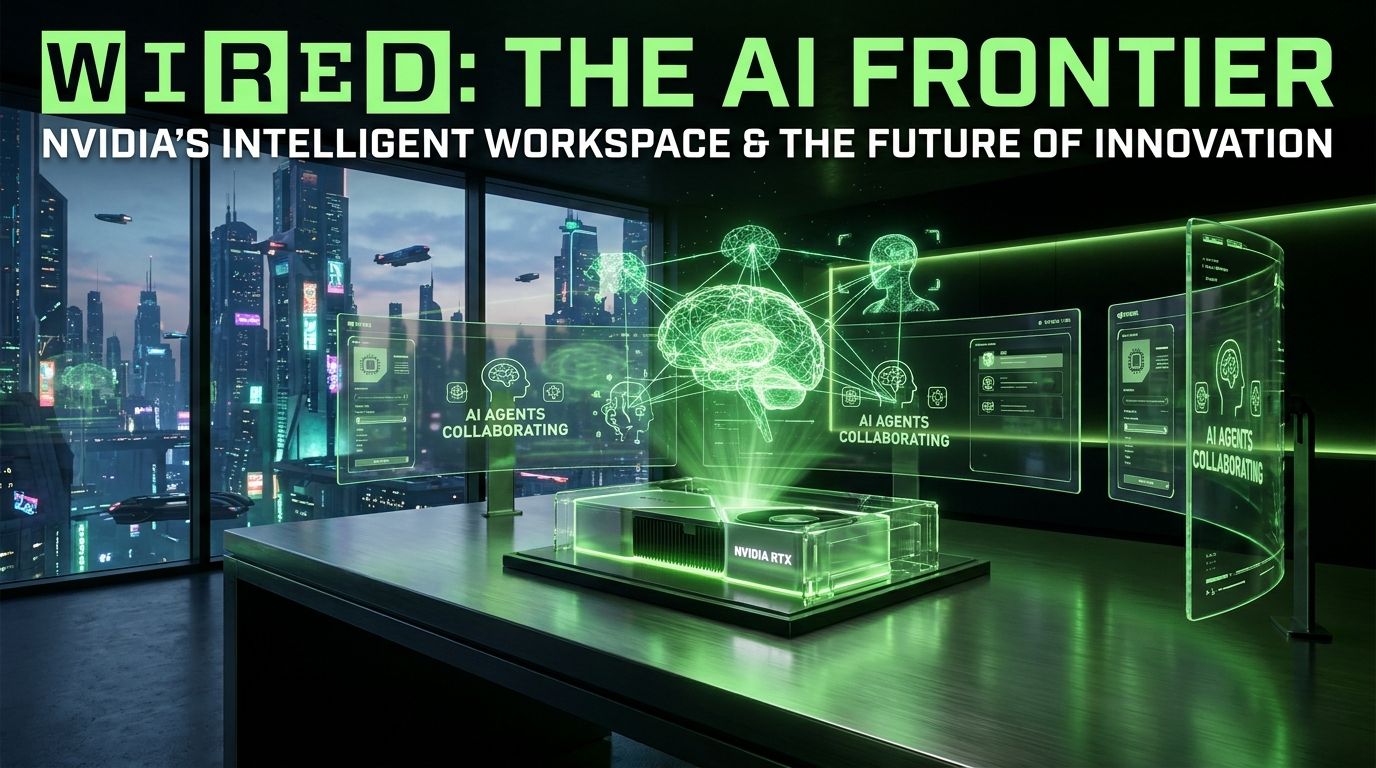
Nvidia's Vision of an AI-Native Computer: The Next Computing Revolution
For decades, personal computers have followed a simple pattern: users provide instructions, and software executes them. From typing commands into terminals to clicking buttons in graphical interfaces, computers have largely remained passive tools waiting for human input.
But NVIDIA believes that era is ending.
The company that transformed graphics processing and became a dominant force in artificial intelligence is now championing a bold new concept: the AI-native computer. This vision represents a fundamental shift in how humans interact with technology, potentially redefining the future of personal computing.
What Is an AI-Native Computer?
An AI-native computer is not simply a traditional PC with an AI chatbot installed.
Instead, it is a computing system designed around artificial intelligence as a core operating principle. AI becomes the primary interface, assistant, collaborator, and decision-support engine rather than just another application.
Imagine a computer that can:
- Understand natural language commands.
- Anticipate your needs.
- Perform complex tasks autonomously.
- Learn from your work habits.
- Generate content, code, designs, and insights instantly.
- Coordinate multiple applications without manual intervention.
Rather than navigating menus and software interfaces, users interact with an intelligent agent capable of understanding goals and executing workflows.
Why NVIDIA Is Leading This Transformation
NVIDIA has become one of the most influential companies in the AI era due to its leadership in accelerated computing.
Its GPUs power:
- Large Language Models (LLMs)
- AI Research Labs
- Autonomous Vehicles
- Robotics Platforms
- Scientific Simulations
- Enterprise AI Infrastructure
With the rise of generative AI, NVIDIA recognized that future computers will require dedicated AI processing capabilities.
The company is investing heavily in technologies such as:
- AI PCs
- NVIDIA RTX AI Workstations
- Grace CPU Architecture
- Blackwell AI Platform
- AI Development Frameworks
- Edge AI Computing
These technologies provide the foundation for a world where AI is integrated directly into the computing experience.
The End of Traditional User Interfaces?
For decades, operating systems have relied on windows, icons, menus, and pointers.
NVIDIA's AI-native vision suggests a future where many of these interfaces become secondary.
Instead of:
"Open Photoshop → Create File → Import Image → Apply Effects"
You simply say:
"Create a cinematic poster for my upcoming spiritual event with golden lighting and Sanskrit typography."
The AI handles the entire workflow.
This approach dramatically reduces complexity and makes advanced technology accessible to non-technical users.
AI as Your Personal Digital Team
One of the most exciting aspects of AI-native computing is the concept of multiple AI agents working together.
Imagine having:
Research Agent
Finds information, analyzes trends, and summarizes insights.
Writing Agent
Creates blogs, reports, presentations, and documentation.
Coding Agent
Writes software, debugs applications, and explains technical concepts.
Design Agent
Generates graphics, videos, UI layouts, and marketing materials.
Planning Agent
Manages schedules, projects, goals, and priorities.
Instead of using separate software tools, users collaborate with an ecosystem of intelligent agents.
The Hardware Behind AI-Native Systems
Running advanced AI models locally requires tremendous computing power.
This is where NVIDIA's hardware strategy becomes crucial.
Future AI-native computers will include:
Dedicated AI Accelerators
Specialized processors optimized for neural networks.
High-Bandwidth Memory
Faster access to massive AI models.
Advanced GPUs
Capable of real-time inference and content generation.
On-Device AI Processing
Reducing dependence on cloud services while improving privacy and responsiveness.
This hardware-software integration creates experiences that feel instantaneous and intelligent.
Impact on Software Development
Software development may undergo one of the biggest transformations in history.
Developers will increasingly:
- Describe features instead of coding everything manually.
- Use AI-assisted architecture planning.
- Generate test cases automatically.
- Debug applications with AI support.
- Create prototypes in minutes rather than weeks.
The role of developers will evolve from writing every line of code to orchestrating intelligent systems.
Opportunities for Businesses
Businesses adopting AI-native computing could gain significant advantages:
Faster Decision Making
AI can analyze large datasets and provide actionable recommendations instantly.
Increased Productivity
Routine tasks become automated.
Reduced Operational Costs
Organizations can accomplish more with smaller teams.
Better Customer Experiences
AI agents can provide personalized support at scale.
Accelerated Innovation
Ideas move from concept to execution much faster.
Challenges Ahead
Despite the excitement, several challenges remain.
Privacy Concerns
AI-native systems require access to large amounts of personal and organizational data.
Security Risks
AI systems could become targets for sophisticated cyberattacks.
Ethical Considerations
Questions around transparency, bias, and accountability must be addressed.
Workforce Adaptation
Many professions will need to adapt as AI takes over repetitive tasks.
The transition will require thoughtful regulation and responsible development.
What This Means for Everyday Users
For average users, AI-native computers could become:
- Personal tutors.
- Career advisors.
- Creative partners.
- Research assistants.
- Productivity coaches.
- Business consultants.
Instead of learning software, users simply communicate objectives.
The computer handles the complexity.
This shift has the potential to democratize expertise and make powerful capabilities available to billions of people worldwide.
The Bigger Picture
NVIDIA's vision extends beyond faster computers.
It represents a future where computing becomes more human-centered, intuitive, and intelligent.
Just as smartphones transformed how people access information, AI-native computers may redefine how people create, learn, work, and innovate.
The next generation of computing won't be measured only by processor speed or memory capacity.
It will be measured by how effectively computers understand, assist, and collaborate with humans.
And according to NVIDIA, that future is arriving much sooner than many people realize.
Final Thoughts
The AI revolution is moving beyond chatbots and automation tools. NVIDIA's AI-native computer concept points toward a world where artificial intelligence becomes the foundation of the entire computing experience.
Whether you're a developer, entrepreneur, content creator, or everyday user, understanding this transformation today could help you prepare for the opportunities of tomorrow.
The age of AI-native computing has begun—and NVIDIA intends to be at the center of it.
More to read?
Browse all articles on the blog.